A cigar rest is a small feature with disproportionate influence on the usefulness of an ashtray. Many buyers notice the colour or outline first, then discover that the notch is too narrow, too shallow or awkwardly positioned for their preferred cigar.
Rather than judging an ashtray by its overall shape, imagine the exact moment when a cigar needs to be set down securely. That is the most revealing test of the design.
Look at the support point
A rest should provide a predictable place to put down the cigar without forcing it to balance on the edge of the bowl. Its width, curvature and distance from the centre can change the experience. Some decorative notches look attractive in a photograph but offer limited contact with the cigar. Compare the rest to the sizes and shapes normally used in the household. If those vary, a versatile design may be more helpful than one made around a single narrow format.
Placement matters as much as geometry
A well-shaped rest can still be inconvenient when it faces the wrong seat. For a shared table, identify which visitors will be reaching the ashtray and whether they can approach the rest without moving other items. A central ashtray with several rests may suit a group; a single rest may make more sense beside one chair. Consider the height of the tabletop and the position of any drinks before choosing a large, sculptural piece.
Compare real products carefully
Look at several angles in the buy ashtray assortment to judge the notch, rim and bowl instead of relying on the outer silhouette. Look for more than one angle when available. If the resting area is hidden, make a note of the missing information rather than assuming that a decorative groove will function well. Product dimensions can tell you whether the piece will fit the surface, but they cannot replace assessing how the cigar will actually rest.
When a notch looks wider than it is
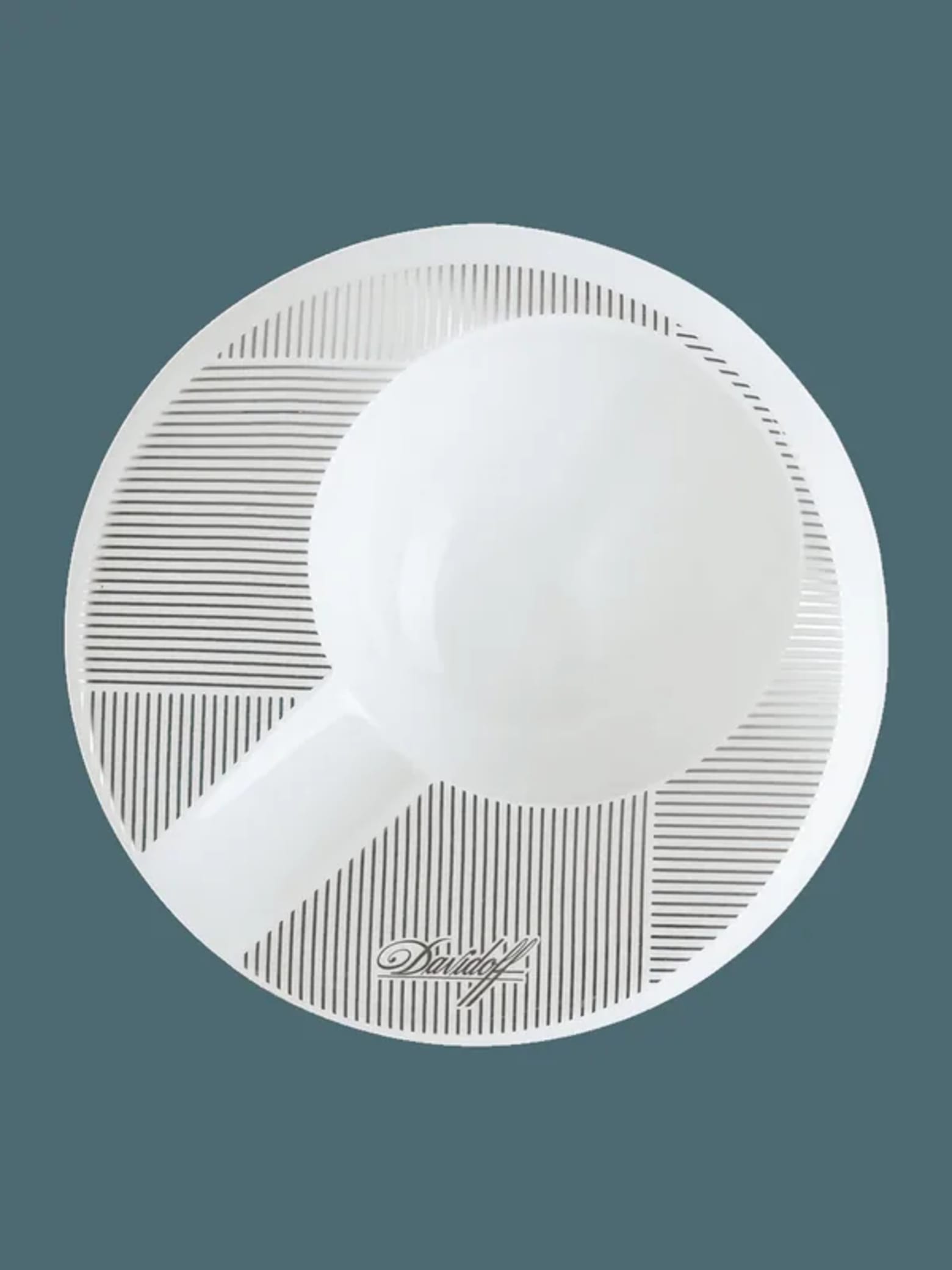
A single-cigar porcelain ashtray demonstrates how rest geometry can matter more than the external silhouette.
An ashtray photographed from above seems to have a generous resting notch. From a lower angle the same notch reveals a raised decorative lip that makes it awkward for a larger cigar. This is a common limitation of catalogue photography: an attractive viewpoint can hide a functional detail without intending to. Compare more than one photograph and look for a view showing the actual resting surface. If there is no useful view, the missing dimension should be treated as a question to resolve. The rest is a contact point, not merely a design feature.
After assessing rest geometry, Outdoor Ashtrays for Dubai Terraces: Weight, Wind and Cleaning explores exposed terrace settings and Why a Deep-Bowl Ashtray Works on a Small Coffee Table focuses on bowl depth for tight tabletops.
The simple tabletop rehearsal
Use an object of similar length to visualize the reach from the intended chair to the ashtray. The goal is not to conduct a laboratory test; it is to reveal obvious awkwardness before purchase. A design that offers secure support, a reachable position and uncomplicated cleaning will usually be more useful than one that looks striking only when empty.
#CigarRest #AccessoryDesign #PracticalDetails